I've mentioned before that The Economist and I don't use organic produce. Briefly, we prefer to support developing world agriculture; organic is not as environment-friendly as it is perceived to be; and we have never noticed a significant difference in taste that cannot be accounted for by more gentle handling of less produce. I don't think this is going to start any fireworks, because so few people read this blog.
What I do want to talk about is this: when does paying more for a more chichi product pay off? There are a lot of people who will tell you that this particular product is better than others and don't even bother using the cheaper, more common one because it's foul. I'm not trying to say one should not be discerning when deciding what to eat. For example, I do think it's best to eat things in season because that's when they taste the best. The most illustrative example is strawberries--flavorless but expensive in winter; juicy, fragrant and reasonably priced (I don't say cheap) in summer. And location is important--some things just don't travel well.
Then there are the things you can't do anything about. For example, Darina Allen in the Ballymaloe Cookery Course cookbook breaks my heart once in a while. It's one of my favorite cookbooks ever but sometimes it is just really, really discouraging. Darina gives a recipe for a good-looking hot salad with bacon--but, she says, don't bother making this unless you have the finest bacon available to humanity (do you know what movie that's from?). If you use regular grocery-bought bacon, the salad will be vile and so will you. At another point she gives a recipe for shepherd's pie, which is one of my favorite homemade dishes. Her recipe uses leftover roast lamb from a whole leg, which I suppose they make regularly at Ballymaloe House. I would never, ever try to roast a whole lamb leg except perhaps for a very special occasion, so I know my only option is going to be ground lamb, which Darina dismisses as 'nothing like so delicious' as her leftover roast lamb. It's so disappointing when you get excited to try a great new recipe, and are then told you do not have the means to make it properly (and by means, I mean financial means and access), so you shouldn't bother trying. And to this day I have never tried either Darina Allen recipe.
Then there are the preferences I don't understand or think are merely foodie pretentions. For some reason, Mark Bittman of the NYTs has something against iodized salt. Don't really know what that's about. Isn't salt iodized because people don't get enough iodine in their diets? I like my sea salt too, but I don't think it's necessarily better than regular iodized table salt and I don't think there's anything particularly wrong with iodized table salt.
When is it worth it to seek out and pay more for a certain product over another? When is the difference negligible? I have been testing a few comparative products the last few weeks since we got back from Paris.
For example, when we went to Paris we came back with fleur de sel, which is highly prized among foodies. I've been using it for some time, alongside my usual coarse sea salt and table salt. The conclusions I've drawn are these: I can tell the difference between table and sea salt when it comes to texture but not flavor. Unfortunately I can't discern any difference between sea salt and fleur de sel except that fleur de sel has smaller crystals. Fleur de sel is supposed to taste faintly minerally, like the sea marshes from which it's gathered. I don't taste it. This probably says more about my palate than the salt but quite frankly, if you're on my level, you won't notice the difference in flavor either so don't bother spending the extra money unless you're interested in the finer texture.
Another item we brought from Paris was Valrhona Chocolate. Everyone claims Valrhona chocolate is the best. And, yes, they are correct. Valrhona chocolate is worth paying more for because you really can tell-it is a cut above the rest. I won't stop eating cheaper chocolate, but now I know--Valrhona is a special treat to be eaten plain and simple.
UPDATE: I just told The Economist I was writing about Valrhona chocolate and he, the real chocolate fiend and connoisseur in this house, started researching where in London we could find more. He's demanding that we buy some more TOMORROW.
I can also come down firmly on the side of good quality vanilla extract. Imitation vanilla extract is just bad--don't do it! It doesn't taste good and you always have to use a ton of it, which makes things go liquidy and also colors it all a dingy brown. I prefer to use real vanilla extract because you use so little of it at a time that it isn't that expensive in the end, and it's so good; it's also really important to use a good vanilla extract when it's the predominant flavoring as with creme brulee, or panna cotta (which is a recipe I will be making and posting soon!). Come to think of it, it's also good to use a good vanilla extract when it's not a predominant flavor, like in chocolate things (chocolate is nothing without vanilla).
I had read that shallots are the Rolls-Royce of onions. I've been using them for several weeks and let me tell you, they're great. They're small, which means it's easier to dice them really, really small, if that's what you want. They are also sweeter and more flavorful than regular yellow onions, especially when you slice them very thinly and caramelise them in a pan until they're slightly crispy. I wouldn't use them if I was making something really highly flavored like a curry, but when you want the flavor of caramelized onions, they're delicious.
Baguettes are better than sliced bagged bread. Sorry, it's the truth. I've been spoiled by living in a place where I have ready access to them. When I move back to the States, I'll think about becoming a more serious home baker.
There was an article in the NYTs a few years ago about cooking with wine. They reached the same conclusion I have reached: it isn't worth it to cook with an expensive wine because you can't tell the difference in the end. Drinking, that's another story. But then I don't drink very expensive wine.
I don't see any difference in taste between organic eggs and non-organic eggs. I do buy free-range because they have become readily available, are not that much more expensive, and I like to think of the hens running around in the sunshine.
Anything else?
Tuesday, 20 April 2010

Friday, 9 April 2010
North African Cous Cous, Two Ways
In Paris The Economist and I had north African cous cous twice and they were our favorite meals. If you've never had it, it's basically a stew served over cous cous, a very tiny piece of wheat pasta. I'm making it two ways--a vegetarian version, and a lamb shank version. The idea here, especially with the meat, is to let it roast slowly in the oven for a long time on a low heat so the meat ends up tender, juicy and melting off the bone.
 For the meat version, start with an oven-proof dish and enough lamb shanks to fill it loosely. I had never cooked lamb shanks before I made this stew for the first time, but I must say they are a very satisfying thing to cook and eat. You also need onions, a can of chopped tomatoes, some garlic and chicken (or lamb if you can it) stock.
  There is a mix of spices that goes into the stew. Don't worry too much about quantities or the exact mix. Whatever you've got works, just make it spicy if you want. I used ginger, cumin, paprika, ground coriander, nutmeg, cinnamon, dried red chili pepper flakes and cayenne pepper.
 The vegetarian cous cous the Economist had in Paris was called cous cous sept legumes--7 vegetables--but I couldn't think of a 7th, so my version is cous cous six legumes. For this version use whatever vegetables you have around. I like to use sweet potato, zucchini, onions, carrots (here little baby chantenay carrots--so pretty!), a can of chick peas and a can of chopped tomatoes. You also need more garlic and vegetable stock, as well as the spice blend from above.
  For the cous cous you need cous cous, obviously, some boiling water, and I like to add raisins for a sweet burst.
  So let's start the lamb stew. Put some olive oil in the bottom of a large saucepan. Once it's really hot, put the lamb shanks down into it to sear the outside of the meat. (I think I should have trimmed the fat off these lamb shanks, but I forgot to.)
  This accomplishes the goals of giving the meat color (otherwise it will be hideously white and raw-looking), rendering down the fat and connective tissues on the outside and giving a bit more flavor by caramelising and crusting the outside. So I'm told.
  When that's done, remove the shanks and set them in your oven dish to rest for a minute while you do the vegetables for the meat stew.
  In the bottom of the saucepan, you'll get all the caramelized, concentrated meat juices and a bunch of rendered liquid fat. It's probably a good idea to skim the extra fat off, because you don't really need it. Leave a little bit there though, to cook the onions in.
  Toss in the onion halves and minced garlic and give it a stir. This is not to cook the onions really, just to get them going so they roast/braise slowly in the oven later.
  At this point, add the spices. A little bit of each one, but go easy on the nutmeg and if possible use a while cinnamon stick, not here, but later.
  Next add the can of tomatoes.
  And the chicken stock. Bring the whole thing to the boil.
  Then pour the whole volume over the lamb shanks in the oven dish. Nestle a stick of cinnamon into the depths of the liquid to perfume the whole thing. Cover tightly with aluminum foil and put the whole into a very low oven, around 150 C (what is that in F? I don't know.)
  Next, start working on the vegetarian version. Roughly chop all the veggies into largish chunks. In a hot frying pan, heat a little olive oil, then put in the vegetables, one at a time to sear the outside a bit. This is mostly for the color as before, and not an attempt to cook them. They'll just look so much prettier later.
  Do each type of vegetable including the sweet potatoes, zucchini, onions and carrots. Pour them all into another oven dish. This time I used a sheet cake pan because I didn't have anything else.
  Look at those pretty carrots!
  In the same pan, reduce the heat, warm a little olive oil and add the garlic. Add a small amount, about 1/4 cup of the chopped tomatoes.
  Throw in the spices.
  And stir them into the tomatoes and garlic.
  Next add the drained can of chick peas...
 ...the tomatoes and the vegetable stock. Stir and bring the whole thing to the boil.
  Pour all the liquids over the vegetables in the oven dish.
  Don't forget the cinnamon stick!
 Cover tightly with aluminum foil and put it in the oven also.
Now it's pretty much a waiting game. You should leave everything in the oven for at least 2 hours. I left everything in for 4 or 5 hours. But the wait is soooo worth it.
 Here is the lamb after 1 hour. Kind of sad looking, but you can tell it's getting tender.
 Now after the full 4 hours, the meat is sliding off the bone, it's juicy and tender. Perfect.
 In the meantime, make the cous cous. I have the kind where to make it you just pour boiling water over and let it sit under plastic wrap for 5 minutes.
 Then you sort of fluff it up with a fork.
 I like to throw some raisins over the cous cous, then put some meat next to it, and pour over the oniony sauce.
 Here is the lamb after 1 hour. Kind of sad looking, but you can tell it's getting tender.
  Now after the full 4 hours, the meat is sliding off the bone, it's juicy and tender. Perfect.
  In the meantime, make the cous cous. I have the kind where to make it you just pour boiling water over and let it sit under plastic wrap for 5 minutes.
 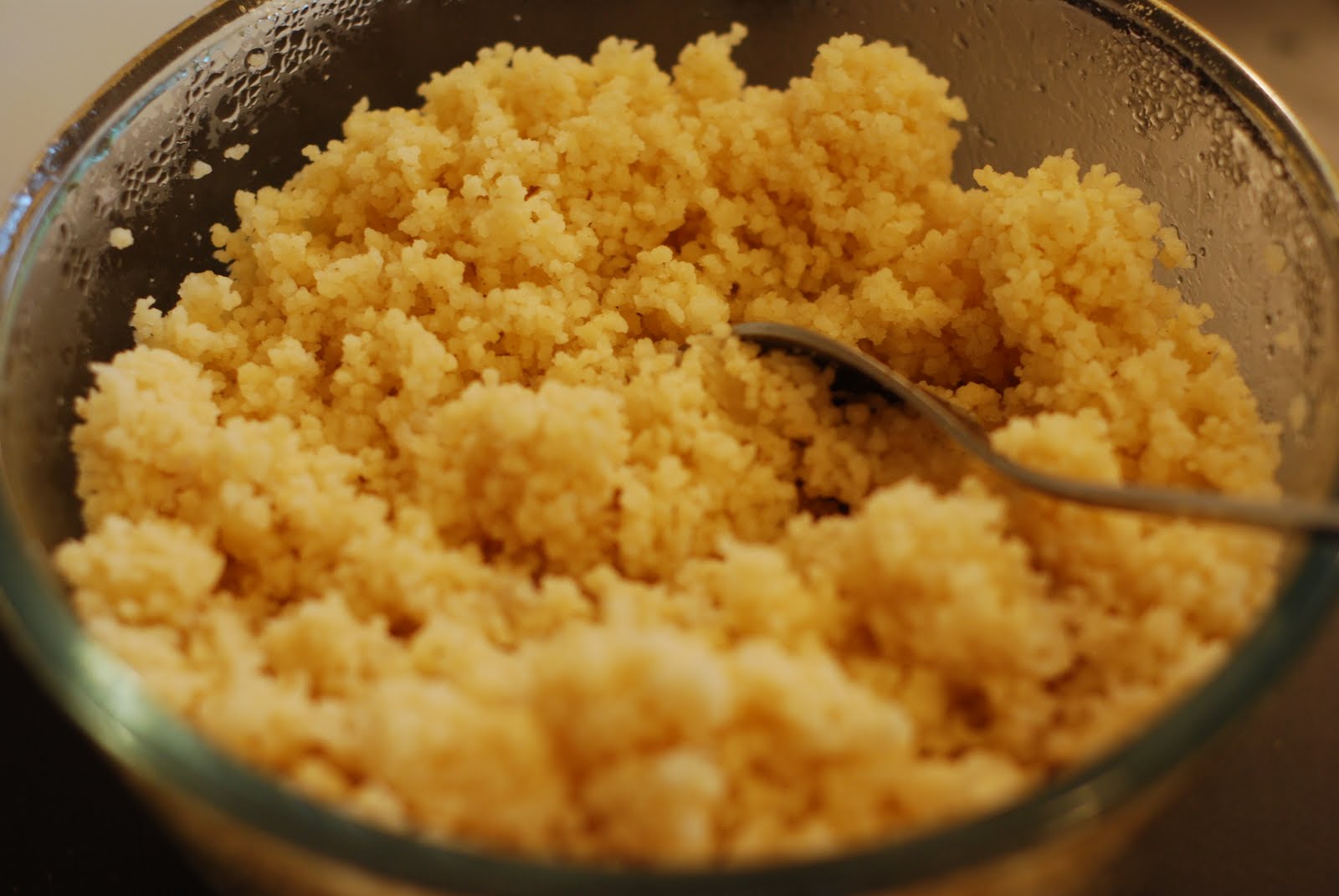 Then you sort of fluff it up with a fork.
  I like to throw some raisins over the cous cous, then put some meat next to it, and pour over the oniony sauce.
 It's so good!
And I don't have any pictures of the veggie version, because I forgot, but it looks pretty much the same. Use your imaginations.
Bon apetit!
Wednesday, 31 March 2010
Scrambled Egg Curry
This recipe is an old standby. It's perfect because it's fast (I've got it down to 20 minutes from start to stuffing your face), it's made with ingredients you always have on hand, it's spicy, it's filling, it's vegetarian but packs plenty of protein, and it's delicious. What it is NOT is a beauty queen among foods. It's ugly, but you won't care once you start eating.
 For a scrambled egg curry, of course, you need eggs; give 2-3 per person. Onions--usually I use regular yellow onions, but I had some shallots available. Rice. Milk. Garlic. Curry powder. Ground ginger. Salt and pepper. A bit of butter. Okay, a lot of butter.
  Melt the butter in a large frying pan and add finely diced onion and a pinch of salt, stirring until the onions are soft and limp.
  Here is a better focused picture!
  Meanwhile take your eggs and put them in a mixing bowl. Add a splash of milk or, if you have it, cream. The cream will make for a slightly more unctuous final product and if you have no objections, I highly encourage the liberal use of it. Just pretend you're making an omlet and add a corresponding amount. It's not rocket science people.
  Now mix that up, adding lots of black pepper and some salt as well.
  When the onions are soft and melting, add the curry powder, garlic and ginger. Mix thoroughly with the onions.
  Pour the eggs on top and proceed to make scrambled eggs. Make sure you agitate the onions well with the eggs so the eggs don't go hard and rubbery and to disperse the spice thoroughly.
  Don't scramble them too hard, that's no fun! Keep it soft, but not liquid.
 Did I mention you should have made the rice by now? Sorry. Insert that step somewhere above. Pile the egg curry on top of the steaming rice. I told you it isn't a beauty queen. Just eat it up.
  Does a perfunctory garnish make it look any better? No? Just eat it.
Monday, 29 March 2010
Food Tourism Souvenirs
I wanted to buy a nice souvenir from France because it is likely that our trip will be the last time we'll ever go there. I was thinking a tarte tatin dish, or a madeleine pan. I couldn't find a tarte tatin pan and I decided I wouldn't really use a madeleine pan so that seemed like an impractical souvenir. (I don't make or eat madeleines and I couldn't figure out what else to use it for--muffins? I couldn't decide. It didn't seem practical.) What I really wanted was something that I would use on a regular basis for the rest of my life and whenever I used it I would remember my trips to France. Since I couldn't find a souvenir that would last forever, I decided to get something that would last no time at all. In short, I decided the best souvenir would be an edible one. So I went to a French supermarket (the infamous Monoprix, yes, sorry!) and walked the aisles picking up things that looked interesting or things that I'd had before and wanted to take and eat over to the UK.
 First, I have to mention the produce at various green grocers in France. I had to buy this carton of strawberries. Strawberries in March in the UK are a vile ghost of what they are in summer, when they are fabulous. But these strawberries which were all over Paris when we were there are unbelievable. They are so fragrant and so beautifully formed, so glossy and have such beautiful colour.
 Look how beautiful they are! And they tasted so good--soft and juicy, they positively gushed in the mouth. And I bet they never even once saw the inside of a fridge. I would have loved to put these into an Eton Mess, but alas, I had no kitchen.
 Okay, here is something that I found at the grocery store, which I am almost frightened to try. This is rabbit pate--yes, I know, scary. But I'm fascinated by potted, preserved meats. And at another time I had a really good pork pate, pate de campagne. So rabbit pate might just be up my alley.
 Valhrona is supposed to be the best chocolate available (or to quote Withnail and I, the finest chocolate available to humanity), and having now eaten some, I have to agree. This is the best chocolate I have ever had. Since I only got a small amount, we've been eating it plain in small bites. If you ever have a chance to try it don't miss it. I like it because it is intensely chocolately without any of the acrid hit of most dark chocolate. It's also deliciously smooth when it melts in the mouth. It's fabulous.
 Here are a couple of canned pates, pate de campagne, which I had at a restaurant with bread, and terrine aux cepes, a pate of mushrooms, for the vegetarians among us.
 This is probably my second favourite pure candy (after American Smarties). They're hard candies with fruit syrup on the inside. There used to be an American candy called Juicefuls, which are pretty much the same, but I haven't seem them in a few years. Do they still exist?
 I was also sure to pick up some charcuterie (cold cuts or other cooked meats) with these saucissons secs--dried sausages. I can't wait to try these, but I'm not sure what to have them with. I also got some refrigerated sliced jambon de paris (ham) which I hope to put into a sandwich or eat like proper charcuterie, with bread and some olives or cornichons.
 I also got these fabulous packets of vanilla sugar. I've always wanted to make vanilla sugar (by putting some caster sugar in a jar with some whole vanilla pods) but the vanilla pods always seemed so expensive. These sugar packets are fantastic. I put half a packet in my hot chocolate this morning, and saw that not only does it smell and taste beautifully of vanilla, it is also full of tiny vanilla seeds, the true mark of a good vanilla sugar.
 I know you can get Bonne Maman jams everywhere now, even at Super Wal-mart, but I've never seen this Fruitee Intense label before. It's still jam but more fruity and less sugary. It's less well-set and feels more like a juicy fruit compote than a jam. I've been spooning it over a butter-spread baguette just about every morning since we got back.
 I once had a steak with a fabulous bearnaise butter and I thought this sauce might be an easy way to achieve a similar flavour without having to go to the trouble of making bearnaise myself, although I do hope to try it sometime. (But it sounds like a lot of work and I'm scared of sauces containing eggs!) Bearnaise sauce is made of butter and egg yolks with a white wine and shallot reduction, mixed with fresh tarragon. So complicated! I don't care if this jarred sauce is unsophisticated, I'm giving it a try.
 This is a very interesting thing: fleur de sel--flower of salt. It's a type of salt gathered from sea marshes by hand. It's quite a bit more expensive than regular table salt but it's valued because it's quite rare, hand gathered, and because it's unrefined provenance gives it a special flavour and often a slightly pink or grey tinge. I've had a bit and haven't noticed too much of a difference, but I'm going to experiment more with putting it on fresh things like salads and tomatoes.
Last but not least...
The only thing better than an edible souvenir is a quaffable one! The Economist and I went to a wine shop and told the man we had 60 euro, and wanted 4 bottles, 2 red, 2 white; and could he please pick some good wines for us. And he did! And gave us a whole list of what we should drink each wine with. The two best wines I've ever had, I've had in France (and they were both white incidently) so we figured maybe we'd give it another try.
We are going to have an English style Sunday lunch sometime in the next few weeks for our friends and we're very much looking forward to enjoying some of these groceries with them, especially the wine!
C'est tout.
UPDATE:
I also wanted to mention that foods are also really cheap, as well as pleasing, souvenirs. Sometimes they can be a bit of hassle though. The Economist once drove down to Key West with a bunch of his friends for New Years. And he brought back an actual Key Lime Pie, stored, still frozen, in a styrofoam cooler full of dry ice. We're talking about a 28 hour drive split over two days. And a fully intact, delicious, true Key Lime Pie to eat when he got home. How fabulous is that?
Subscribe to:
Posts (Atom)
