Have you ever had panna cotta? Please try it some time. If you like creme brulee, you'll like this. If you like vanilla, you'll like this. If you like food, you'll like this. Please note: Some people think the texture of panna cotta will be the same as creme brulee. It isn't. Instead of being thickened by eggs, it's thickened with gelatin, so it feels more like gelatin. However, a good proportion of cream in the mix keeps things tasting and feeling creamy.
  Here are the ingredients. I'm giving measurements in grams and milliliters. If you can't measure that, well, tough nuggets.
 100 gm sugar
10 gm powdered gelatine
1 tbsp vanilla extract
Then you need 600 total milliliters of liquid, split by any proportion between cream and milk. I think the ideal is 300 mls of cream and 300 mls of milk. Keep it relatively low on calories and fat, but keep up a nice texture and flavor.
I also added a packet of my vanilla sugar from France so that I ended up with lots of tiny vanilla flecks in the final custard.
 Take a bit of the milk and put it in a separate bowl. Sprinkle the gelatine on top and swirl/stir to dissolve it.
  In a saucepan combine the milk and cream mixture, the sugar and I added the vanilla sugar. Bring that mixture to a boil.
  In the meantime, the gelatine should have sort of dissolved into the milk.
  I like to make the panna cotta in individual ramekins. I get 8 ramekins with this recipe.
  Once the milk mixture is boiling, add in the gelatine mixture and stir to combine and dissolve the gelatine. Bring the mixture to the boil again and boil for about 1 minute.
 After that, take off the heat and cool for a few minutes. Add the vanilla.
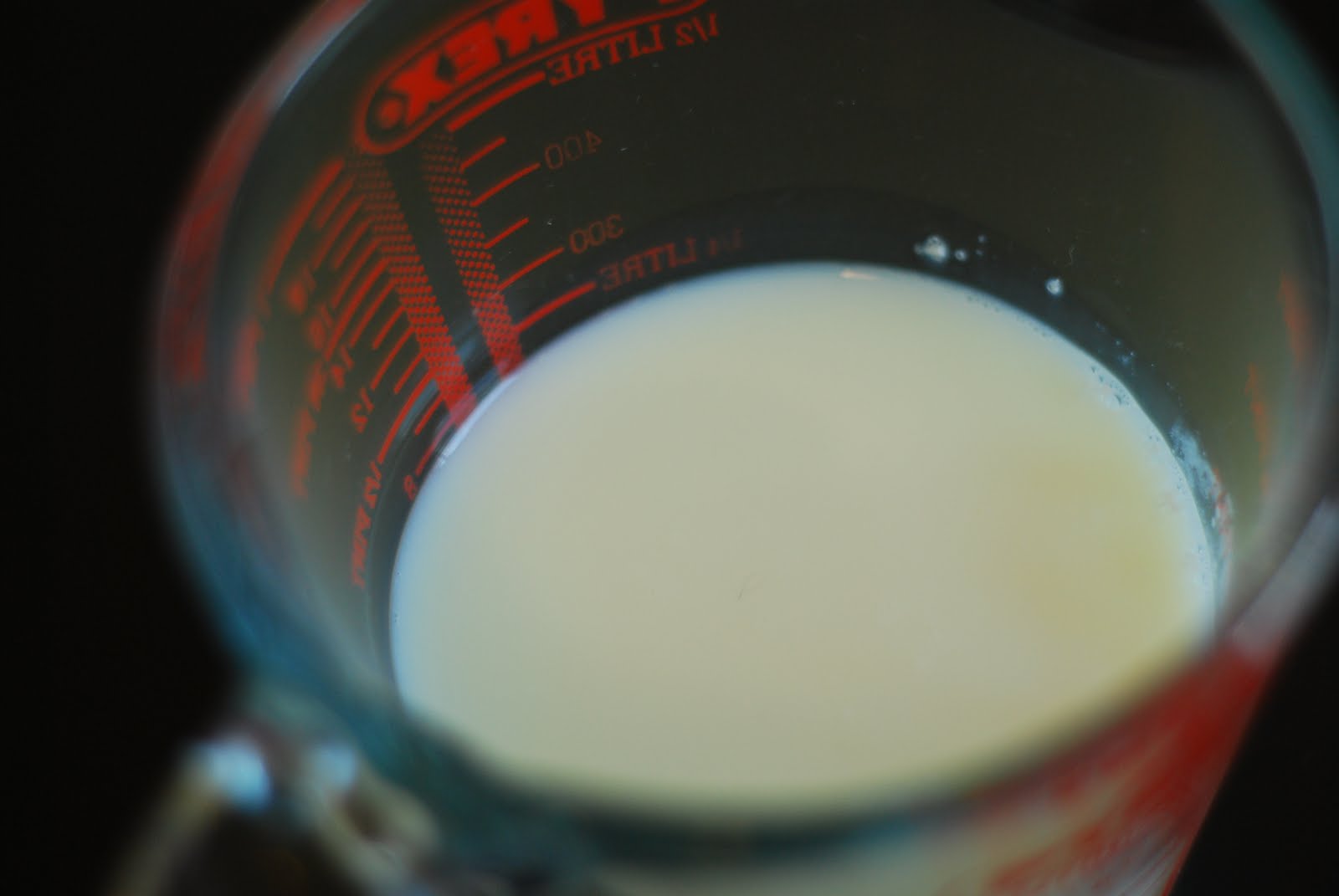
 In order to get the cream mixture into the individual ramekins, I pour it back into the measuring jug first. It gives you more control when pouring.
 Fill the 8 ramekins (or you could do one large shallow dish) and leave to cool to room temperature. Then cover and put in the fridge overnight.
 Once set, they look like this and are firm but yielding to the touch.
 In order to get the cream mixture into the individual ramekins, I pour it back into the measuring jug first. It gives you more control when pouring.
  Fill the 8 ramekins (or you could do one large shallow dish) and leave to cool to room temperature. Then cover and put in the fridge overnight.
  Once set, they look like this and are firm but yielding to the touch.
 You can eat them like this, but they are really good when you top them with some fruit, especially fruit that has a sharp edge, such as passion fruit pulp or my favorite, raspberries.
 You can add the raspberries right on top and dig in, but I like to crush the berries up first. Put them in a bowl with a tiny bit of sugar and just mash with a spoon. No need to make them perfectly smooth as long as they're crushed and juicy.
 Spoon on top of the panna cotta and dig in. It's a lovely combination of sharp and fruity and creamy and sweet. Try it!
 You can add the raspberries right on top and dig in, but I like to crush the berries up first. Put them in a bowl with a tiny bit of sugar and just mash with a spoon. No need to make them perfectly smooth as long as they're crushed and juicy.
  Spoon on top of the panna cotta and dig in. It's a lovely combination of sharp and fruity and creamy and sweet. Try it!