Showing posts with label Potatoes. Show all posts

Tuesday, 6 July 2010

Eating in Ireland


The Economist and I are in Ireland enjoying a little holiday on our way back to the US of A. Yes, we’re moving back permanently. We’re excited, but we’re also excited about Ireland.
Now, just because the Irish tiger is taking a cat nap does not mean the Irish food revolution is dead. It is alive and well, if the meals I have eaten here reflect the whole. This has largely been attributed to this woman:
I have written about Darina Allen before. She is very inspiring but can be intimidating. She runs a guesthouse and cooking school in County Cork and also... a restaurant! The Economist and I had our anniversary dinner there this year. It happened to fall on a Sunday, which is the one day a week that dinner is served as an all-you-can-eat buffet. However, this is not some greasy, rank Old Country Buffet-type affair—this was beautiful, delicious and very high class!
More on that later.
The night previous, we rolled into Cork City quite late and ended up eating dinner in the same restaurant where we once celebrated an anniversary (or was it a birthday?) when we lived in Ireland 6 years ago. The only thing I remember about that meal was the dessert—a gorgeous caramel and pear hot pudding served with vanilla ice cream—and the setting. It’s a gorgeous restaurant with tables arranged under cavernous brickworks. I’d describe it as classy but bustling. And it was certainly bustling with activity, even late at night when we got there. We decided to bring one of our Paris wines over with us to Ireland and drank it with our meal. The Economist had a cream of mushroom soup, which I swear is the same recipe from the Ballymaloe cookbook because I make a similar one. Whatever, it was delicious, at least the spoonfuls I ate. Everything was served with delicious Irish brown bread and butter. Then I had a pan seared scallop salad with a lemon beurre blanc. I am loving the hot salads. Especially when they come with fresh local seafood. The Economist had some kind of local cheese, hot, over salad with roasted pumpkin seeds and something else... can’t remember what! For dessert, we split a delicious meringue nest with lemon curd and passion fruit pulp. So good, I can’t tell you.
Well, then, the next night we had this absolute feast at Ballymaloe House. We arrived a bit early and were invited to a parlor where everyone was waiting for dinner, sipping pre-dinner drinks. Then we were shown into the dining rooms, and given our choice of soup. The Economist had the Moroccan lentil soup and I had a chicken consommé. The chicken consommé was absolutely delicious—crystal clear and so bursting with chicken flavor. And inside were delicate little shavings of fresh vegetables—among which were carrots and zucchini. It was so good I didn’t even ask for a taste of the Economist’s lentil soup.
Once we had eaten our soup and more of that same delicious brown bread (how do they make it???) we were INVITED into the buffet room. We could choose between starting with a starter course or going straight to the main course primarily of large joints of roasted meats. We could come back for each course as much as we wanted. I think I ended up getting four salad plates of starters alone. This was not the kind of buffet where they try to fill you up with cheap carbs to begin with. In fact, there were very few carbs at all and I had to ask politely to be given more of that brown bread. They started the buffet table with good stuff and ended with more good stuff. There were mussels and clams on the shell with some sort of delicious sauce. There was local fresh smoked salmon. There was Swedish gravalax with a dill mayonnaise. There were whole raw oysters. I tried one for the first time, and while it was pleasantly briny, the supposed aphrodisiac quality and the thought of the associated... shall we say... anatomy... left me less than desirous for a second. This one guy took, like, only 8 or something. There was also a shelled mussel, on a little round of brown bread with a mustard sauce and then topped with some kind of yellow mousse and decorated with a tiny little flower. There were also four different types of pate. Ooooh, I have such a weakness for pate. I had two slices of chicken liver pate with bread and it was very, very good. I’m only listing the things I ate, there was so very much more. Everything there, by the way, is house made with produce they grow and even some animals they rear themselves. Other items come from trusted farmers in the local area.
After the starters, you’re supposed to move on to a salad course, and there are so many salads to choose from. I ate, among others, some tomato salad. I was curious how this tomato salad would taste because in the Ballymaloe cookbook, Darina gives her recipe and insists that when making a tomato salad, tomato slices MUST be spread out in a SINGLE layer. And on the whole, I have to agree. It certainly made for a tasty salad. There were also just dressed greens, which are always good. There was a fantastic potato salad, probably the best I’ve ever eaten, which means I shall be looking at the recipe in the cookbook whenever I next want to make potato salad.
After I had eaten several plates of these things, I decided to transition to main dishes, those large joints of roast meats. There was such a choice and I pretty much had a slice of each. I had roast pork with applesauce, the most delicious rare roast beef, roast lamb off the leg, roast goose, and a delicious ham with hot, hot mustard. The only things I didn’t eat were the roast beef tongue and the turkey. I save my turkey eating for November and December.
Matt had a special vegetarian main dish, which was a lot like the one the night before—a cheese soufflé on salad leaves with walnuts and grapes. He said he liked it.
Then, after all that, there was still dessert. We could choose any or all of the following: coffee meringue roulade, strawberry shortbread tart, poached gooseberries, chocolate ice cream and crème brulee, all served with extra whipped cream. These items were ceremoniously wheeled on a trolley to each table as they decided they were finished with the main course. The chocolate ice cream was presented in another Ballymaloe House innovation, an ice bowl, a bowl made of solid ice on which scoops of ice cream are mounded to keep them from melting in the dining rooms. I had a slice of the strawberry shortbread tart, some crème brulee and some gooseberries, just to try them. The gooseberries were like grapes only they tasted more plain, rather like apples. The strawberry tart was delicious as well, but the real star of the dessert trolley was the crème brulee. It was presented family style, made up in a huge dish, about three quarters of an inch deep, glazed with a delicious carapace of caramelized sugar and piped with whipped cream all around the edges. Each serving came rather homily scooped up and put on the plate, the shell sliding a bit over the oozing cream. It tasted simply like a dream.
Finally, there was tea or coffee. By then we had been eating for almost three hours! The soup seemed a long, long time ago. It wasn’t gluttonous, manic, shovel-into-mouth eating, it was just a really genteel and civilized procession of courses, one following the other. Halfway through the tea though I simply had to give up, I could not eat one more bite nor drink one more sip.
It’s funny—it sounds like it was a really formal and rigid meal in a stuffy setting, but it was really so casually elegant. The servers were just guiding us through the whole process, we could eat as much as we wanted of everything, going up whenever we were ready, and if something was running short, they’d bring it over to your table for you. The tables were set with nice clean linens, simple glassware and—GASP!—real silver cutlery, which I LOVE. There is nothing quite like eating with real silver. It was a dream.
What an amazing meal! And who would have thought Ireland would be the location of some of the best food I’ve ever eaten?

Friday, 9 April 2010

North African Cous Cous, Two Ways

In Paris The Economist and I had north African cous cous twice and they were our favorite meals. If you've never had it, it's basically a stew served over cous cous, a very tiny piece of wheat pasta. I'm making it two ways--a vegetarian version, and a lamb shank version. The idea here, especially with the meat, is to let it roast slowly in the oven for a long time on a low heat so the meat ends up tender, juicy and melting off the bone.
For the meat version, start with an oven-proof dish and enough lamb shanks to fill it loosely. I had never cooked lamb shanks before I made this stew for the first time, but I must say they are a very satisfying thing to cook and eat. You also need onions, a can of chopped tomatoes, some garlic and chicken (or lamb if you can it) stock.
There is a mix of spices that goes into the stew. Don't worry too much about quantities or the exact mix. Whatever you've got works, just make it spicy if you want. I used ginger, cumin, paprika, ground coriander, nutmeg, cinnamon, dried red chili pepper flakes and cayenne pepper.
The vegetarian cous cous the Economist had in Paris was called cous cous sept legumes--7 vegetables--but I couldn't think of a 7th, so my version is cous cous six legumes. For this version use whatever vegetables you have around. I like to use sweet potato, zucchini, onions, carrots (here little baby chantenay carrots--so pretty!), a can of chick peas and a can of chopped tomatoes. You also need more garlic and vegetable stock, as well as the spice blend from above.
For the cous cous you need cous cous, obviously, some boiling water, and I like to add raisins for a sweet burst.
So let's start the lamb stew. Put some olive oil in the bottom of a large saucepan. Once it's really hot, put the lamb shanks down into it to sear the outside of the meat. (I think I should have trimmed the fat off these lamb shanks, but I forgot to.)
This accomplishes the goals of giving the meat color (otherwise it will be hideously white and raw-looking), rendering down the fat and connective tissues on the outside and giving a bit more flavor by caramelising and crusting the outside. So I'm told.
When that's done, remove the shanks and set them in your oven dish to rest for a minute while you do the vegetables for the meat stew.
In the bottom of the saucepan, you'll get all the caramelized, concentrated meat juices and a bunch of rendered liquid fat. It's probably a good idea to skim the extra fat off, because you don't really need it. Leave a little bit there though, to cook the onions in.
Toss in the onion halves and minced garlic and give it a stir. This is not to cook the onions really, just to get them going so they roast/braise slowly in the oven later.
At this point, add the spices. A little bit of each one, but go easy on the nutmeg and if possible use a while cinnamon stick, not here, but later.
Next add the can of tomatoes.
And the chicken stock. Bring the whole thing to the boil.
Then pour the whole volume over the lamb shanks in the oven dish. Nestle a stick of cinnamon into the depths of the liquid to perfume the whole thing. Cover tightly with aluminum foil and put the whole into a very low oven, around 150 C (what is that in F? I don't know.)
Next, start working on the vegetarian version. Roughly chop all the veggies into largish chunks. In a hot frying pan, heat a little olive oil, then put in the vegetables, one at a time to sear the outside a bit. This is mostly for the color as before, and not an attempt to cook them. They'll just look so much prettier later.
Do each type of vegetable including the sweet potatoes, zucchini, onions and carrots. Pour them all into another oven dish. This time I used a sheet cake pan because I didn't have anything else.
Look at those pretty carrots!
In the same pan, reduce the heat, warm a little olive oil and add the garlic. Add a small amount, about 1/4 cup of the chopped tomatoes.
Throw in the spices.
And stir them into the tomatoes and garlic.
Next add the drained can of chick peas...
...the tomatoes and the vegetable stock. Stir and bring the whole thing to the boil.
Pour all the liquids over the vegetables in the oven dish.
Don't forget the cinnamon stick!

Cover tightly with aluminum foil and put it in the oven also.

Now it's pretty much a waiting game. You should leave everything in the oven for at least 2 hours. I left everything in for 4 or 5 hours. But the wait is soooo worth it.
Here is the lamb after 1 hour. Kind of sad looking, but you can tell it's getting tender.
Now after the full 4 hours, the meat is sliding off the bone, it's juicy and tender. Perfect.
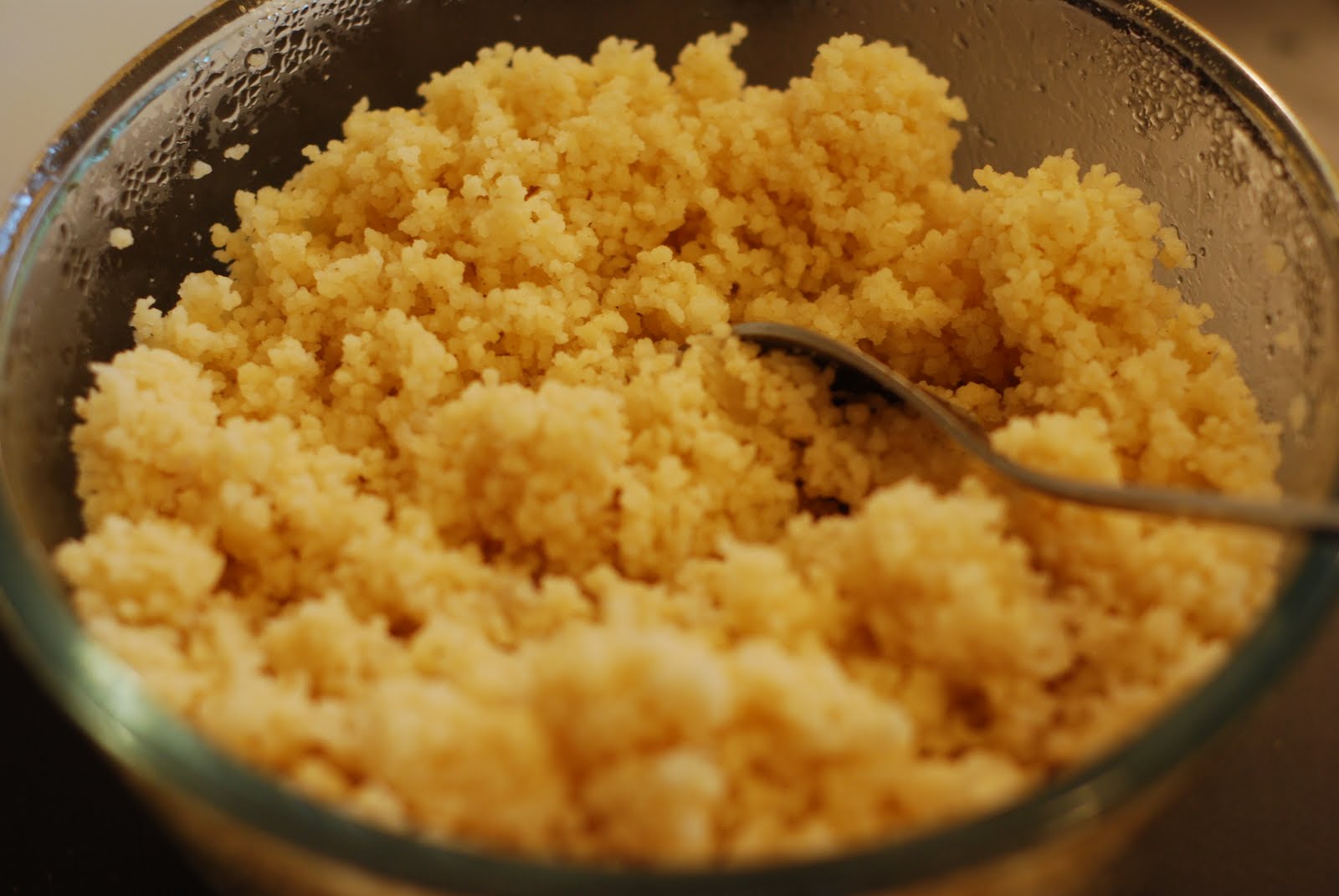
In the meantime, make the cous cous. I have the kind where to make it you just pour boiling water over and let it sit under plastic wrap for 5 minutes.
Then you sort of fluff it up with a fork.
I like to throw some raisins over the cous cous, then put some meat next to it, and pour over the oniony sauce.

It's so good!

And I don't have any pictures of the veggie version, because I forgot, but it looks pretty much the same. Use your imaginations.

Bon apetit!

Sunday, 7 March 2010

Roast Veggies, British-Style

Here is a super-carby and super-satisfying side dish. It is essentially a bunch of cut up root vegetables. But, it's British-style, by which I mean it uses a lot of traditional British produce which perhaps wouldn't habitually make it onto an American plate. It's a warm and filling side to eat along with leftover meats or whatever you have.
Use whatever you have around. I had a lot of stuff laying around. I used some new potatoes, a sweet potato, some leftover butternut squash, and a red onion. I also have baby carrots, but usually I like to use whole chantenay carrots, which are gorgeous and make the whole thing look rustic and homey. Another traditional British element is parsnip. I used to hate parsips, now I quite like them. (Try roasting them glazed with maple syrup--yum, they're like candy.) I also have a leek. At first, this seemed kind of strange but trust me on this, they're so good when they're roasted and sweet.
Put a good couple of glugs of olive oil in a sheet pan. Sprinkle it with the seasonings so it's easier to coat things evenly later. Here I have seasoned everything with dried sage and parsley, salt and pepper. Cut all the veggies into roughly evenly sized pieces. Put in the oven at about 350F or 170C for half an hour.
After half an hour, take the pan out, gently turn the veggies and put it back in for another 20 minutes.
By now things will be caramelised and sweet.
I had this as a side dish to some roast chicken thighs.

Wednesday, 24 February 2010

Potato Curry and fried eggs

Okay, this is going to be good.

I can't claim 100% credit for this, but I think I can claim around 60%. I've been making curried potatoes for years. The Economist and I usually eat it with rice, but eventually realised we were pretty much bombarding ourselves with carbs. We stopped eating it for a while, but recently I found a Nigella Lawson recipe of a type of potato curry served with... wait for it... a fried egg, dipping the spicy potatoes into the runny yolk. I'm a big fan of anything that requires dipping into runny egg yolk. Add to these positives the fact that this is quick, easy and absolutely delicious. PLUS, totally vegetarian. PLUS PLUS it's made from staples you usually just have on hand, so no special shopping trips for this. Let's get into it.

It's pretty simple: potatoes, eggs, garlic (or garlic paste as I have here), and curry powder. If you've got it, fresh parsley, coriander or any other fresh herbs really make it.


Chop the potatoes into bite size pieces and put in a pot of cold water. Rinse the potatoes once, then refill the pot with cold water, set it boiling and cook until the potatoes are cooked through but still holding their shape. Should take about 15 minutes.


Drain the potatoes and keep them on standby while you prepare the spices.


Put a few good glugs of olive oil in big wide frying pan. Add your garlic, whatever form you use. If it's raw, let it soften a bit to take away the edge.


This curry powder is a special mix my mom makes. She gave me a big bag at Christmas and I put some into an empty jar. I use 2-3 teaspoons for a full pan of curry. It's pretty strong and spicy. If you don't make your own curry powder (who does? I don't, I got it from my mom after all) just experiment a bit adding different spices, including chili powder (important for a hot curry), ground coriander, cumin, cinnamon, nutmeg, etc, etc. whatever you want. I like it hot.


Lovely brick red. At the same time, add some salt. Okay, lots of salt. These potatoes need lots of seasoning.


Add the potatoes, which will hopefully have steamed off any extra liquid and stir gently to coat.


So golden and delicious. I can't ever keep myself from eating a bunch before I'm even done with the rest of the meal. Cover the potatoes and put them aside while you cook the eggs.


Just fry them up in a separate pan. Season with salt and tons of pepper.


Add the herbs and enjoy. The spicy, grainy potatoes are delicious alongside the accompaniment of the bland, sort of buttery eggs. Mm-mm, so good.


RECIPE PROFILE
Recipe Type: Dinner
Vegetarian Classification: Vegetarian

Thursday, 4 February 2010

Lentil Shepherd's Pie

RECIPE PROFILE
Recipe Type: Dinner
Vegetarian Classification: Vegetarian


One of my favourite dinner dishes is Shepherd’s Pie. It’s a warm, comforting British classic, perfect for the dead of winter. And that is just one of the great things about it. It’s also easy to make (though it requires a bit of time). You can make it in advance and put it in the fridge until it’s ready. It reheats really well. It can be the main event or can be served with salad or other side veggies.

Most importantly, it’s delicious.

And I can’t take credit for that. It’s all thanks to Chef Colman.

Confession:
Colman’s a food brand popular here in the UK. They make mustard and other condiments. They also make spice mixes for dozens of types of dishes. Most of them I wouldn’t touch (who wants to make hollandaise sauce from a paper packet?). But the packets I swear by are the cottage pie and shepherd’s pie mixes. You just mix them into the meat filling and it tastes great. Points for anyone who knows the difference between a cottage and shepherd’s pie. (See answer at the end of the post.)

For American viewers, it probably sounds odd to have a pie filled with meat. But it’s not supposed to be for dessert. It’s a savoury dish, sometimes with an unsweetened pastry crust. Shepherd’s pie is the kind of pie that is topped with mashed potato and baked so it gets a crisp, golden-brown topping; creamy, buttery mashed potatoes underneath; and saucy, savoury ground lamb underneath. Usually you have the lamb mixed with onion, carrots and peas.

The version I’m making is VEGETARIAN. Instead of the ground lamb, I’m using Puy Lentils, carrots and onions.

Puy lentils are a really interesting food. They are lentils that are grown in the Le Puy en Velay region of France. The soil in that region is mostly volcanic, and it gives the lentils an extraordinary dark-green, navy blue-ish color. When you’re rinsing them, they look and feel like tiny pebbles. They also have a unique flavor, which reminds me of the smell of dirt. I have to confess that I’m one of those people who perversely craves the taste of earth. These have that flavor, so they must suffice.

Right, let’s make a vegetarian shepherds pie!

Here are the ingredients, minus some olive oil, butter, salt and pepper dashed in here and there.


So we’ve got a lot of potatoes for the mash, puy lentils, an onion (although I used two in the end), some stock pots, grated carrot, worcestershire sauce, roasted garlic puree, dried sage and Colman’s Shepherd’s pie mix. I know, it says beef casserole, but that was the only one I had on hand. It’s pretty much the same mix anyway.

I start by cooking the potatoes, which I peel first. You can make it with unpeeled potatoes and it’s probably healthier that way, but prettier without the peel.


And this is how I cook the potatoes:


This steamer is great. I use it for just about everything. It steams the potatoes quickly and mostly painlessly, with minimal clean-up. It wasn’t expensive either, I got it from Argos for £15 (about $20) and I use it all the time.

At the same time, start cooking the lentils. Rinse them thoroughly (they might have bits of volcanic dust on them!) and drain them. Don’t they look fantastically like black pebbles?


Usually you just have to boil them in water for 15-20 minutes. You can also boil them in stock for an extra hit of flavor. So that’s what I did. By stock, I mean boullion mixed with hot water. I used this new product from Knorr (don’t know if it’s available in the States yet) where they just super-concentrate vegetable stock and put it into little pots. It gels up and you just dump them into a pot and add water. In this case I used 2 cubes and around 1 liter of water.


After the lentils are cooked, drain them again and you get this:


In the meantime, cook up the grated carrot and finely diced onion in some butter melted with olive oil.


Add the lentils once they’re cooked and mix it all up.


Add the Colman’s mix and stir it on in, along with half a cup of water. It's also at this stage I add a bit of sage, a traditional shepherd's pie seasoning.


Next add a few dashes of Worcestershire sauce. This stuff makes anything taste great. It’s not fully vegetarian because it contains anchovy paste, but it makes vegetable dishes taste slightly more substantial. If you're strict, just leave it out.


Once the potatoes are done, mash them up. I hate this masher, by the way, I’m looking into buying a new one, but potato ricers seem so expensive. I prefer light and fluffy mashed potatoes.


Partway through the mashing I add a heaping spoonful of this stuff:


It’s roasted garlic puree. I cut off the tops of several heads of garlic, coated them in olive oil, salt and pepper, wrapped in foil and put them in an oven for a long time. They come out nutty brown and almost sweet. I squeezed the garlic out of the bulb and blitzed it in a small food processor to get a whole jar of this puree, which I’ve been adding to just about everything. It is delicious but has a strong garlic flavor, so get your Altoids out. The Economist and I mixed some up with softened butter and spread it onto sliced baguette. Garlic is extremely good for you and we eat tons of it. Here it’s making garlic mashed potatoes.


Once the potatoes are mashed and the garlic is pretty much mixed in, add butter, salt and pepper. I also like a bit of mustard to give more flavor. Sometimes you want mashed potatoes simple, but here I want them to have a full-on flavor to stand up next to the lentils.


Now for the assembly in my humble Pyrex dish.


Spoon in the lentil mix.


Top with dollops of the mashed potato.


Then smooth it out with a fork.


Once it’s smooth, take the fork and rake it through in straight lines to make peaks and furrows.


When it’s baked, the peaks and little bits of mashed potato poking up will get golden-brown and crisp.


And there you have it, before it’s baked.


After it’s baked, it will look like this:


Then it’s just a question of getting it scooped up onto a plate and digging in. Enjoy!


Answer: What is the difference between cottage pie and shepherd's pie? Cottage pie is made with ground beef, shepherd's pie is made with lamb, hence the shepherd bit. Obviously not applicable with a vegetarian pie, but I call it shepherd's pie because of the addition of sage and because it sounds better.